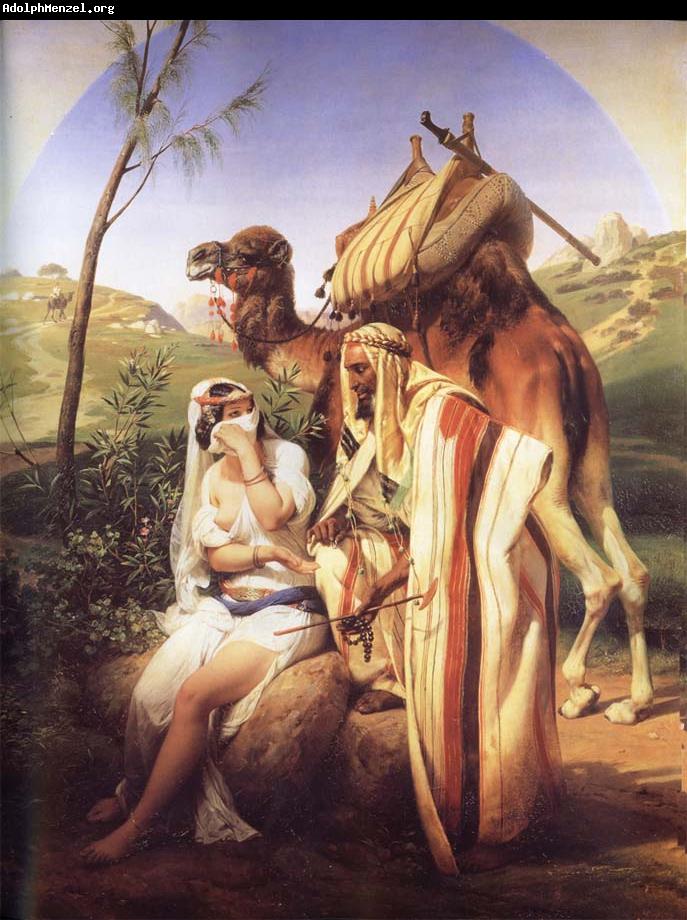
 The story of Tamar is notable for its theosexual novelty: a tantra of benevolent deception that yields inception through a Truly innovative drama (innovation = role play = changing of clothes, from one garment to another garment). Her Holiness derives Its power from her primordially cosmetic allure.
Three brief observations (each in succession falling like a dead husband):
- Tamar's three husbands, the sons of Judah, perish because they can't take her in, they are unable to grasp her in totality, they are unable to read her.
- When Tamar takes on the garment of Sacred Prostitute (returning in baqa from widow's garment), she is to seduce Judah, she does so at Petach Einayim , the entrance to Einayim.
She put off her widow's garments, and put on a veil, wrapping herself up, and sat at the entrance to Enaim. (Genesis 38:14)
- This is the name of a village but also has the meaning of opening of the eyes. Her Truth appears (in irony) as a (veiled) lie to the man: but is a Feminine miracle of harvest by means of opening of the eyes. The eyes of Who (Mi/Who always means the Divine Mother, the Womb of Creation)? The eyes of the Face of God. It is their opening in Grace that provides her with children, the agency of Judah coincides, transmits this, like a cut-and-paste job.
- Judah sold Joseph to the Ishmaelites: in a very specific way, his sons' evil, their perishing and Tamar's entrapment of him, taking the trope of his Judaic seed into her immanent womb -- this story is the balancing (offset/debt repayment) of that sin.
Let those who read me, read. Let those who do not read, send a scapegoat in lieu of that reading: let them send one down to Petach Einayim.