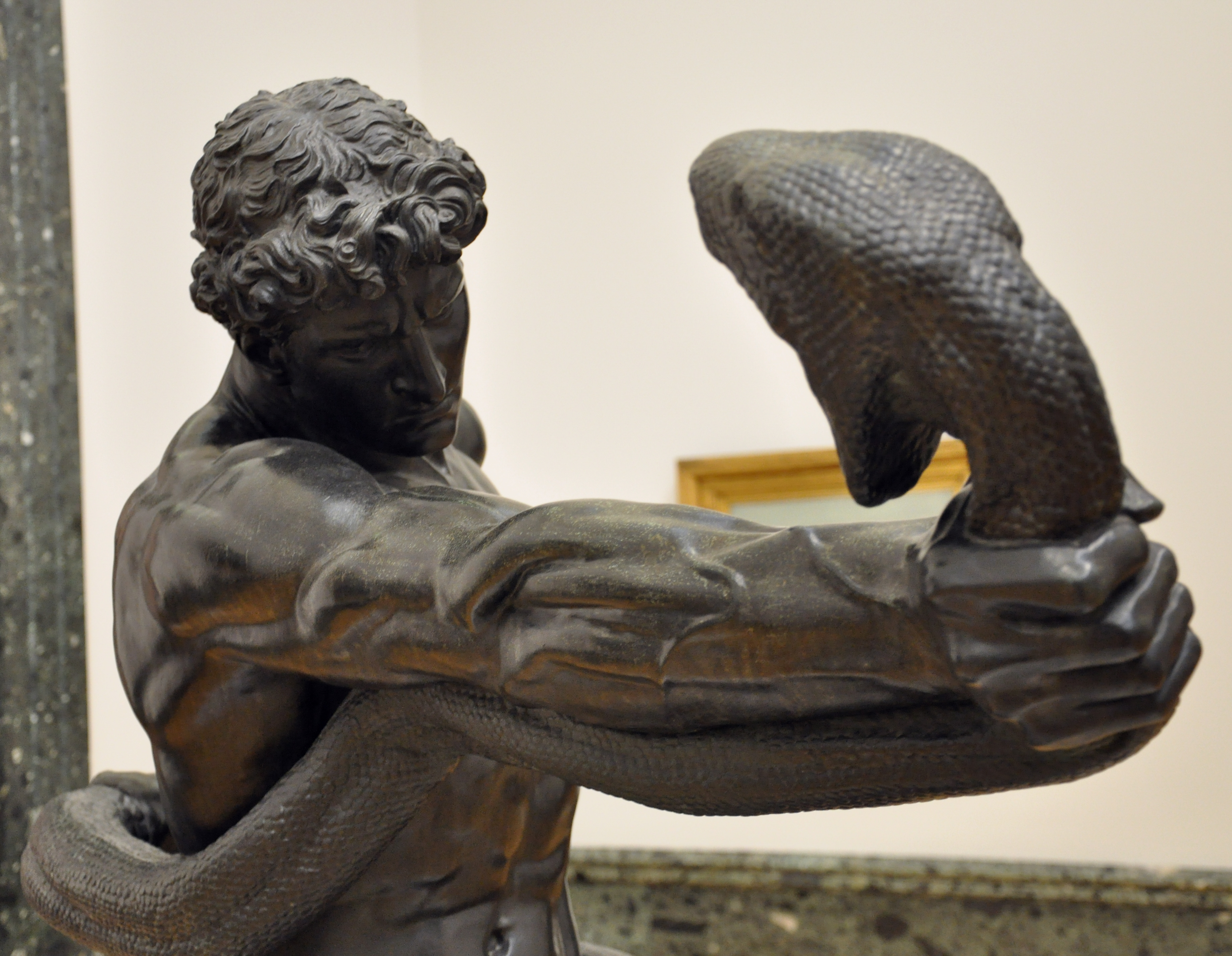
 It's about three years since I posted the following characterisation of the Prophetic voice, a position I spent some time expounding, within this blog and within the Doctrine itself.
The characterisation is as follows. Prophecy is a state in which each and every aspect of life is comprehended as ayat of Allah, signs that intimate Divinity. A perspective on life in which all other relationships to life are deemed superfluous and exoteric: the emphasis is on getting to the core of the thing, your relationship to God via the thing. This is achieved via a Muhammedean phenomenology, which is a technology, which is an art of reading, an essentially Semitic set of techniques, a Kabbalic calculus whose ruler is the Qur'an and hadeeth.
I identified a number of operative principles with respect to this reading, principles I utilized within my reading of the Abrhamic scriptures and of my own life:
- Metonomy. In which we understand the importance of Prophetic perception/sight/revelation (the Qur'an being its epiphany), as a dream-language (exactly the same kind of language as that of the unconscious mind in sleep), in which signs relate to other signs in metonymic flow, Divine transmission of substitution/deferral toward Gnosis. This is in contrast to ordinary speech, that of daily life, which is metaphoric, where one sign is imagined to refer to meaning (actually that semantics is merely a falsely privileged sign). The metonymic nature of revelation is what makes revelation something magical, a realm in which anything might happen -- and one in which rational interpretation does not apply. We cannot ask whether Muhammed waged a particular war physically, whether he slept with a 9 year old girl, whether he even historically existed: it is a nonsense to say his wars and marriages were physical, it is a nonsense to say they were metaphorical. It's a nonsense to speak of him as an historical figure. They are not referent signs -- they are archetypes, their space is the Australian Aboriginal dreamtime, ibn Arabi's imaginal -- a space whose fabric is not metaphoric, not referring but, rather, deferring (submission/Islam) toward Gnosis.
- Self reference. If there is a guiding heuristic within Tailorite hermeneutics, it is that a sign's deferring nature (its metonymic integration within the dreamtime/imaginal of Islamic/Muhammedean becoming) is recovered by means of identifying a self-referential component of the sign's interface to other signs. This is not reference in the metaphoric sense. Rather, it's self-reference: the sign's capability to reflect you, your Self, reading it, comprehending it in the sentence of Divine scripture. The sign "tea" in the sentence "You lift a cup of tea to your mouth" self-refers to the Gnosis intrinisic to the True meaning of the sentence, which is deferral to Divine Gnosis, so close to your mouth (tounge/yesod/circumcised phallus), Divine gnosis lifted to your mouth in your very act of reading/confronting the sentence via your Muhammedean jihad (lifting).
- The Semitic cosmology. All sentences and signs defer to God. But, as illustrated in the previous point, Tailorite hermeneutics utilizes Semitic cosmology in order to identify the self-referential interfaces of signage, leading to this reflective awakening. This cosmology is a projection into our world of a "higher-order" language of forms. While situated within a unique, non-identifiable historical/biological context that is absolutely non-perreneal, our relationships to this Semitic language offer the opportunity to "resonate" with the Truly Perennial nature of True Divine Gnosis. It's culturally specific to equate "mouth" to "circumcised phallus"/"yesod"/conduit of transmission -- or pork consumption to confusion of reading -- or hijab to the differential nature of the Divine immanence. But, nevertheless, by learning that vocabulary, but studying the Semitic ruins -- the Qu'ran being the perfect epiphany of that vocabulary -- we are able to resonate. It's not that the Abrahamic revelations are universal (in the ordinary sense of the word) -- but that their cosmology forms a magic that we can embody, step through, relate to -- and by that act of relation, awaken a Muhammedean becoming. By reciting the surahs, living them through our 21st century eyes, we invoke a 7th cenutry higher-order language that totalizes (predicates over) the signs we encounter in our 21st century lives, an Uwaisi encounter with totalization that brings about their self-reflective interface and, ultimately, their metonymic Islamic component, their deferral to Truth, to God.
I think I got the characterisation right. I found Prophecy through this study, through this reading.
And yet I'm moving away from it. This reading -- I'm departing from it.
Of course I've moved away from cultural Islam, when the Muslims indicated to me that I, a half caste, raised in the West within a Western 60's mysticism, uneducated in the "authentic", indigenous Eastern tradition, was intruding upon them, as a white colonist, a mystically minded orientalist, ultimately commenting and preaching about a religion I wasn't born into, to a people I didn't understand. And that's ok: if I'm not dressed for a particular club, a club where I clearly don't fit in, why would I ask for admittance?
Deeper. Over the course of the last two years, I've found myself at a distance from this inner, personal Islam as well. "My" Islam, "my" kabbalic, Tailorite means of becoming.
Why? Sex and power. Sex and power (one and the same thing) -- the failure to acknowledge the fundamentals of sex and power -- is the reason why.
This way of looking at the world is sexual. It stems from the need to invoke the physical comfort of self-affirmation against the eternal existential void : and that's the definition of sexual need. I'm alone, I need company: void, create me a mate. I'll recite "Let there be light", and there will be light, to fill this darkness. And this is a sexual act, the engendering of light from the lonely void.
There is nothing ethically wrong with this: clearly sex is better than loneliness, light better than darkness, company better than the void. I don't particularly like myself alone, the void's an awful place. And so I love her.
It becomes problematic when it goes beyond sex consensual sex, into more ambiguous territory. The problematic image I created, reiterating the voices of the past, is of a paper Caliphate/Kingdom of God, where Muhammedean becoming is so powerful as to reduce an entire geography to Muhammedean reading. Where no one could say whether a real war was fought or whether it was just souls hammered into submission, where no one could say what was real or metaphoric -- because Prophetic unfolding was so strong that it created a Caliphate of paper, of signage alone, a dreamtime mythic Kingdom in recent times.
And it seems to me that I believed, 3 years ago in that piece, this image is one that is desirable to recreate, something to work towards, a messianic project.
Power, Tailorite fascism. Or, if not fascism, then a symptom whose intrinsic biology is denied. Destroy the metaphoric, destroy the rational: replace it all with the supreme metonymic flow, the Tao of Islam, all signs in metonymic submission, explicitly, not metaphorically, to Divinity alone. The sunnah of Prophecy, the epiphahy of Qur'an: the meta-language read, and read correctly, by Tailorite schools, within Tailorite mosques, resurrecting the Body, an ummah transformed into Insan Kamil, collectively. Aboriginal Islamic dreamtime, imaginal lived, for all.
That kind of Kingdom, the desire for that kind of understanding: it's fundamentally sexual, it's a sex game that involves a larger group of participants. Because the physical need is still the primary driver: the need to substitute for the void, substitute bodies (of spiritual seekers, the sexiest closest to the teacher) for the void.
Why does a Tailor sew, disconsolate when the people of the marketplace don't purchase, comforted by God himself when they don't listen? Because he desires approval -- to the extent that God himself needs to be called in when they don't listen. And why does he desire approval? Because the void, emptiness, tells him: "You're doing really badly, stop now." Because he desires power/pleasure -- to the extent that God himself needs to be invoked to guide toward victory. Wy does he desire power/pleasure? Because the void, emptiness, creates a vacuum of power, an absolute death, an absolute pleasure.
And so he opens his mouth, and recites. For sex, for power.
You can put a more positive "gloss" on this by saying -- well, sex is understood in ancient mysticism of the Tantra as God -- and the Void precedes God, you could call the Void "Binah", God inhaling, for instance, or the Mother. And it's understood in Taoism: these things give birth to God of scripture. Taoism would say that "God" is born from the Way.
But the fact remains: the whole Tailorite operation is a mere psychosexual facade, designed to bring pleasure and self-affirmation to the Tailor, pure and simple. At its high point, he'd whisper his sweet words into the ear of the priest, and, 2 hours later, he'd attend Church and hear the priest recite the same words back to the flock, recite him back to himself, mediated by an entire flock, spiritually elevated. A Musaic/Aaronic love supreme. Pleasure: because it affirmed him , superficially in a spiritual sense, in reality by physicality of that feedback loop.
We could go on -- as we have done, in the Doctrine itself.
What's wrong with this? Nothing, not ethically. We're not puritans here. The problem lies in igoring the facade , appearing puritan, denying the biology, the anatomy of this messianic "body". It's better to be honest, if we are attempting to tackle Truth: the metonymy exists, but it is, first and foremost, a process of sexual substitution, biologically grounded. The ayah/sign is still, first and foremost, the lost object.
It's not that revelation, holy scripture, should be subject to psychoanalysis -- such reading has been done and is not interesting to me.
It's that, to be authentic, tafsir, interpretation, religion itself -- should be understood explicitly as fantasy, a piece of dress up, a sex game between consensual adults who understand the implication of this. It's an intimate act, not a group act (or if it is group, it's still must be intimate). If the rules of this game are not laid down at the outset, if the psychosexual basis is ignored, suppressed, denied -- then the result is psychically damaging.
There is no ultimate omega point, of shared Kingdom. That fantasy misses the point -- the point, self reflexively, that it is fantasy.
Wearing particular religious/mystical garments is no different from wearing kinky leather as part of an S&M ritual. It can be healthy, to exorcise particular fantasies and find pleasure -- to remind us that we exist, in the face of the Void -- but it can be damaging if not approached in a truthful, honest way.
I don't understand the distinction between metaphoric and metonymic or Referring vs Deferring. How is it different from Metaphoric?
Basically metaphor = one sign "meaning" another. When I say "you are my sunshine", "sunshine" refers to someone who brings/someone I value/etc. In contrast, metonymy = one sign sliding into another, in a deferred chain, like in a dream. When I dream that you are in a room and transform into sunshine, that's a metonymy of one sign "you" deferring to another sign "sunshine". It's not like one means the other, it's that "meaning" is deferred, not referred.
I think I basically got it before you posted your reply from reading other posts. When you say deferring, do you mean viewing signs in terms of having no fixed meanings because they are the product of something which is beyond language?